
Operational Manager Programme Unit

  • Fréderique van Drumpt

The project is planned over an area of 2,00,000 acres (Two lakh acres) all over the country, with a target of INR 2,00,000 Crores, with special attention and dedication to innovating newer technology for Agriculture, Waste Management, Energy Conservation and Regeneration, through research and development at actual ground level. This enables the trainee to understand the problems and find a relevant solution that is good to adapt and apply.

Agendas of IIRD

The projects undertaken under the flagship of IIRD are aimed to be Long-Term, so as to not just find a suitable solution to an existing problem, but keep evolving with changing times and the face of the problem, to make the technology and the outcome sustainable.

A wide range of programs will help the underprivileged to stand independently, be it physically, financially, emotionally or spiritually. These programs are designed in close co-operation with the local and national government to ensure their sustainability, which will also be time-bound to ensure their progress.

The research centres under IIRD will provide Free Skill Development Trainings to aspiring students and entrepreneurs, which will be in the following formats:

  • Certification courses of 3/ 6/ 9/ 12 months duration;
  • Diploma courses of 12 months duration.

The objectives of these training will be to make the students self-sufficient in solving the problems faced by them in the fields, as their exposure to these problems is personal, which gives a boost to their intention of resolving them. Our role is to provide them with the best environment where their abilities will grow, with technological, financial and logistic support.

The fact remains that their innovations will actually help find solutions for people who may not be a part of these center but far and wide, improving the overall working in the area of their research.
RESEARCH CENTRES

Agricultural Livelihood

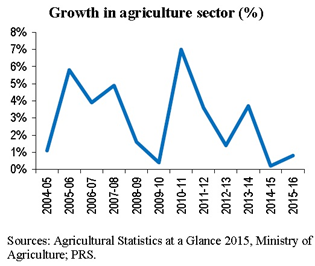
Agriculture is one of the most important occupations throughout the world. In India, 58% of its population is directly dependent on agriculture. We depend on agriculture for our food, shelter, and clothing which are basic to our survival. Industries like genetic, extractive, and manufacturing depend on Earth’s core. Manufacturing industries like cotton, rubber, pharmaceuticals, cosmetics, etc., are totally dependent on agriculture as they use agricultural products as raw materials.
As a highly populated country, the landholding of the farmers in India is very small, sometimes not even sufficient for their livelihoods. Such marginal farmers live below the poverty line as their produce is not up to the mark in terms of quantity as well as quality and their crop can’t fetch them a good price in the market. This leads to a shortage of food, poverty, illness, inequality, migration, etc. Besides, over-exploitative and extractive practices result in soil depletion, pollution of water supplies, and extreme weather conditions.
Vikramshila Foundation has laid down concrete positive measures to find a solution to these problems, our Life Supporters will not be compelled to take their own lives. A revolution can be brought about with innovations in the techniques of agriculture, like Advanced agriculture, Hybrid agriculture, Hydroponics or layered cropping and many more. All such techniques enhance yields, improve quality, provide uniformity, and protect it from diseases.
Relentless efforts are being made by our scientists in the field of research and innovation to increase productivity, food supply, income, and employment. The foundation lays stress on increasing productivity and profitability through testing, sharing, and scaling up eco-friendly practices which restore biodiversity, replenish the soil nutrients, and minimize waste. Farmers will be a part of the decision-making process which affects them. Special support will be provided to the rural communities with collective action for environmental protection and related activities, including climate change, biodiversity loss, and waste accumulation.

Solar energy

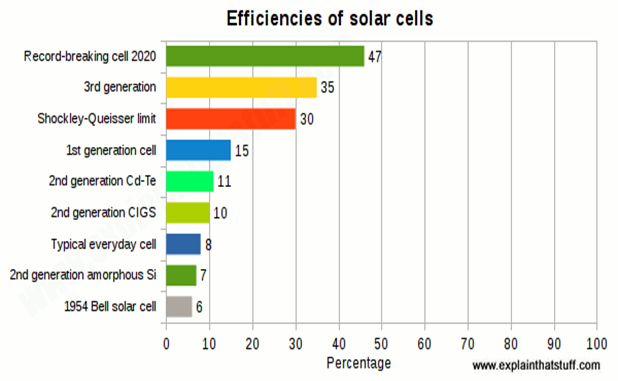
Solar energy is the heat and light from the Sun, harnessed in photovoltaic cells, which in turn convert it into electricity. With Solar Thermal Technology, the water can be heated or turned into steam.
Vikramshila Foundation plans to take steps towards sustainable use of solar power which is an important input to agricultural production. Heating and cooling of the buildings, lighting the farms, operating machinery and equipment will depend on solar energy produced within the premises. Extra energy produced by Solar Panels will be distributed to the community, and may be used to heat water in homes, buildings, and swimming pools.
The use of solar energy will reduce the electricity bills, pollution, and dependence on others. Solar heat collectors will be utilized to dry crops, warm houses, livestock buildings, and greenhouses.

EV Charging Stations

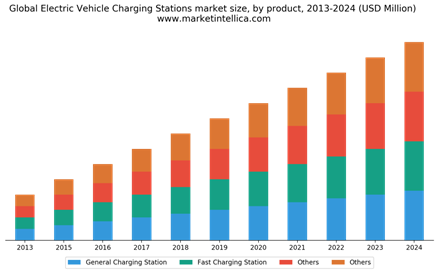
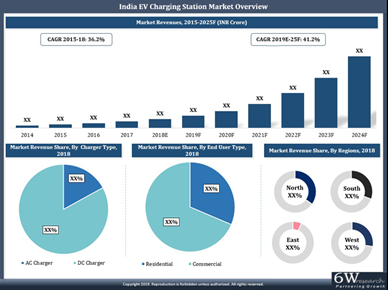
An electric vehicle charging station is a machine that supplies electric energy for the recharging of plug-in electric vehicles—including electric cars, neighbourhood electric vehicles and plug-in hybrids.
There is a need for a transparent solution or a platform where the car owners can view nearest charging stations, record data and check the battery status of the vehicle in real-time, as also the quality of the electricity coming in from the grid that plays a pivotal role in ‘eliminating the anxiety’ among the consumers as well as electric vehicle charging manufacturers.
In terms of calculation, India will need about 4 Mega newton (100kW) fast-charging stations, which will charge the vehicle in 1-2 hours, to sustain the growth of one million electric vehicles,. Yet, another estimate states that India will need 2 Mn (mix of both fast and slow) charging stations to sustain 1 Mn electric vehicles on the road in each city or region.

SOCIO-ECONOMIC PROGRAMS

Alongside the technological innovations and developments, our research centres will also inhabit the following:

Gaushalas– Providing safe and nurturing shelters for cows in India, with focus on treating them well, because of their religious significance, and cultural sensitivity towards their welfare. The main focus of the organization will be to rescue wandering cows and groom them in our centres. Charitable networks will collect contributions, and fund the gaushalas. Donations and events like Yoga and music lessons, enterprises which include workshops, visits and even retreats, aiming at tourists interested in spirituality, alternative medicine etc. will be inherent in our centres. Moreover the refugees or orphans being supported in the ashrams will be the nurturers, providing employment as well as support.

Ashrams- Vikramshila Foundation aims to build Ashrams across the nation for physical, spiritual, mental, and holistic well-being in general, by providing living spaces for the under privileged and homeless, while creating the necessary homely environment for the orphans, widows, specially abled or senior citizens, for them to pass on their experience of life, which can be possibly the best way to learn about life.

We will encourage cultural programs to be organized by youth and showcase the skills and talents while providing a source of entertainment, inspiration, and motivation. A feeling of “Young and Capable” will be instilled in old persons. This will change their perception of their numerous problems and help them to fight with more vigour and determination

Organic Farming- The agricultural system of Organic farming uses fertilizers of organic origin such as compost manure, green manure, and bone meal and techniques such as crop rotation and companion planting. Organic farming is still in its development stage, with a massive scope for improvement and implementation. Biological pest control, mixed cropping and the fostering of insect predators are encouraged while prohibiting synthetic substances.
Organic product supports advantages in sustainability, self-sufficiency, autonomy and independence along with health, food security, and food safety, which is primarily the objective of the organisation.

Water Regeneration/ Restoration – Conservation of natural resources is becoming a growing need in human dependence on Ecosystem Services. Its degradation poses great challenges since most of policies to avoid deforestation have been inefficient and ecosystem restoration is a very costly affair.
Our research attempts to evaluate different restoration strategies to provide for the Ecosystem’s reduction of erosion and of sedimentation. Since the effect on water resources is directly related to these effects on the Ecosystem, we intend to bring as much awareness and availability in the technology to deal with this enormous struggle into an advantage.

Solid Waste Management- This term refers to the process of collecting and treating solid wastes including recycling items that cannot go in garbage or trash which is a major issue. Waste management teaches us how solid waste can be changed and used as a valuable resource.
Solid waste management needs to be practiced by each and every household and all business owners. Industrialization is another leading factor in the creation of solid waste. Construction, animal, hazardous, hospital, bulky wastes etc. are other such solid wastes that need to be managed, and newer techniques need to be worked out, which is the main lookout of our research centres.

ASSOCIATIONS OF IIRD

Technological Association:

U.S.A. has been a centre of capital and technology historically where huge farms and high labor costs reign. Europe still follows more traditional methods, both by consumer preferences and regulation. Still, there are plenty of exceptions like Netherlands, the topmost in horticulture, with robotic greenhouses, and Israel, having their innovations in irrigation, owing to land shortage. Best in Agricultural genetics research outcomes can be given to Australia and Germany. France and China are experts on using drones.
Smallholder agriculture has high value in India, which requires much localized technology. IIRD aims at working to bring in the best of these available around the world, where we have already associated with experts from these countries to support the development of agriculture in the country.

Financial Association:

Leading countries of the world are already helping fund and support innovations and ideas of development, like Japan, Israel, USA, France, Australia, etc. to fulfil the aim of our project.

Spiritual Association:

The ideology of Lord Buddha connects the Foundation with a number of countries in the Asia-Pacific region, with Tibet, Indonesia, Japan, South Korea, etc., who support these philosophies and teachings, and wish to bring about change and development at every possible level.

Our Areas of Work:

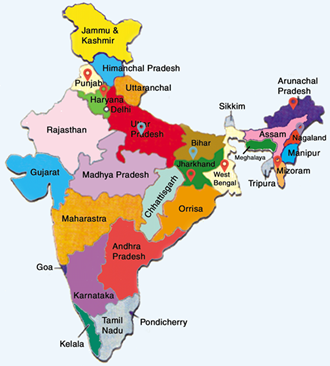
The projects of IIRD will cover the entire country, as work has already commenced in the states of:

  • Haryana = 200 acres
  • Punjab
  • Bihar = 500 acres
  • Uttar Pradesh = 500 acres
  • West Bengal
  • Jharkhand
  • Assam
  • Arunachal Pradesh
  • Mizoram
  • Nagaland

Franchise Model:

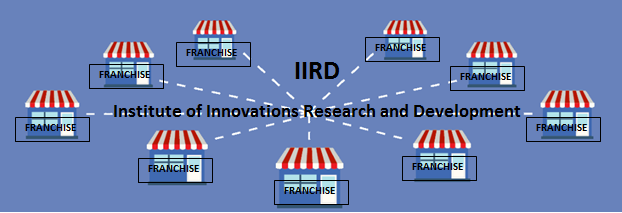
We are open to anyone who wishes to join us in the endeavour to bring a revolution in the field of Agriculture, waste management, and the socio-economic upheaval of the underprivileged section of the society.

Our franchise model is a contractual business model or relationship whereby we will allows an independent business owner, or franchisee, to use our branding, business model, and other intellectual property, to be based and strictly followed as per our ideologies.

Publication

Vikramshila Foundation handles your personal data with care. You can read more about this in our privacy statement.